Moroccan dietary culture is one of the richest in the Mediterranean–North African region, shaped by climate, agriculture, Islamic tradition, and communal eating practices. When examined through the lens of Traditional Chinese Medicine (TCM), Moroccan nutritional habits reveal several remarkable strengths that naturally support Spleen–Stomach function (脾胃 pí wèi), alongside structural imbalances that—when persistent—may contribute to Dampness (湿 shī), Heat (热 rè), and Yang excess (阳亢 yáng kàng).
TCM does not judge food morally but evaluates it according to Qi dynamics (气 qì), thermal nature (寒热 hán–rè), flavor (五味 wǔ wèi), and long-term constitutional impact. From this standpoint, Moroccan cuisine offers both therapeutic advantages and pathogenic tendencies.
Positive Aspects of Moroccan Nutritional Habits in TCM
1. Predominance of Cooked, Warm Meals
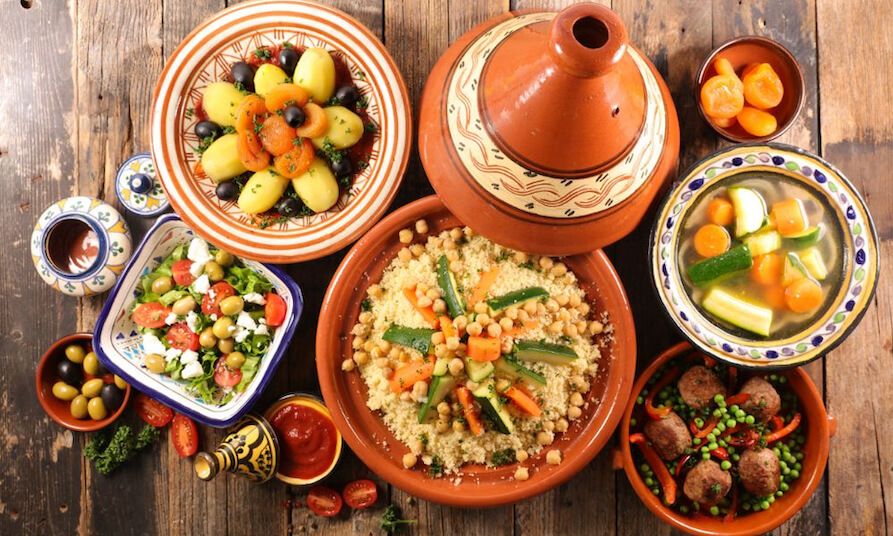
One of the most TCM-aligned aspects of Moroccan food culture is the preference for cooked, warm meals such as:
Tagines (slow-cooked stews)
Harira (legume-based soup)
Lentils, chickpeas, and fava beans
Long-simmered meat and vegetable dishes
From a TCM perspective, cooked food protects and supports Spleen Qi (脾气 pí qì) and Stomach Qi (胃气 wèi qì) by reducing the energetic burden of digestion. The Spleen (脾 pí) dislikes cold and damp environments; warm meals help prevent Spleen Yang depletion (脾阳虚 pí yáng xū).
This habit is especially appropriate for:
Children
Elderly individuals
People with fatigue, bloating, or loose stools
Compared to modern raw-food or cold-drink cultures, this is a clear constitutional advantage.
2. Regular Use of Digestive Spices
Moroccan cuisine employs spices that, in TCM terms, move Qi and warm the middle burner (中焦 zhōng jiāo):
Cumin
Ginger
Cinnamon
Black pepper
Turmeric
These substances support Qi circulation (行气 xíng qì) and counteract food stagnation (食积 shí jī). When used moderately, they strengthen digestion and reduce Damp accumulation.
This aligns well with Morocco’s humid coastal regions and cold winter nights, where warming aromatics help preserve digestive efficiency.
3. Communal Eating and Regular Mealtimes
Eating slowly, socially, and at regular times supports Shen stability (神 shén) and proper Stomach descending function (胃气下行 wèi qì xià xíng).
In TCM, emotional calm during meals is essential. Moroccan communal meals—often eaten seated, unhurried, and without isolation—help reduce Liver Qi constraint (肝气郁结 gān qì yù jié) that commonly disrupts digestion in modern societies.
Negative Aspects from a TCM Perspective
1. Overconsumption of Bread and Refined Wheat
Bread occupies a central place in Moroccan meals, often consumed in large quantities and at every sitting. From a TCM viewpoint, excessive wheat products—especially refined flour—tend to generate:
Dampness (湿 shī)
Phlegm (痰 tán)
Qi stagnation (气滞 qì zhì)
Over time, this may manifest as:
Abdominal distension
Weight gain
Brain fog
Mucus production
Chronic fatigue
This is particularly problematic for individuals with Spleen deficiency patterns (脾虚 pí xū), which are already common in humid and carbohydrate-heavy dietary environments.
2. Excessive Yang and Heating Foods
Moroccan cuisine is rich in Yang-promoting foods, including:
Red meat (especially lamb and beef)
Fried foods
Strong spices used daily rather than seasonally
Sweetened mint tea consumed multiple times per day
While Yang foods are not inherently harmful, chronic overconsumption leads to internal Heat accumulation (内热 nèi rè) and Liver–Stomach disharmony (肝胃不和 gān wèi bù hé).
Common manifestations include:
Acid reflux
Mouth ulcers
Irritability
High blood pressure
Skin eruptions
In hot climates or during summer, this pattern is especially destabilizing.
3. Excess Sugar and Sweetened Tea
Sweet mint tea, often consumed after meals and throughout the day, combines refined sugar with warming herbs, producing a paradoxical effect:
Short-term Qi stimulation
Long-term Spleen exhaustion
In TCM, excessive sweetness weakens the transport and transformation function (运化 yùn huà) of the Spleen, encouraging Damp retention and metabolic imbalance.
Constitutional Consequences in the Moroccan Population
From a pattern-based view, common tendencies include:
Spleen Qi deficiency with Damp (脾虚夹湿 pí xū jiā shī)
Stomach Heat (胃热 wèi rè)
Liver Yang rising (肝阳上亢 gān yáng shàng kàng) in stressed individuals
These patterns do not arise from a single food but from repetition, excess, and lack of balance.
TCM-Informed Dietary Adjustments (Without Cultural Rupture)
TCM does not require abandoning Moroccan cuisine but refining its application:
Reduce bread portions; emphasize vegetables and legumes
Match spice intensity to season
Replace constant sugar intake with moderate sweetness from food
Include cooling foods in summer (barley, zucchini, leafy greens)
Favor stewing over frying
Such adjustments preserve cultural identity while restoring Yin–Yang equilibrium (阴阳平衡 yīn yáng píng héng).
Conclusion
From a TCM perspective, Moroccan nutritional habits possess strong foundational wisdom, particularly in their emphasis on cooked food, spices, and communal eating. However, modern excess, especially in bread, sugar, and Yang-heating foods, has shifted this balance toward Damp-Heat and Yang excess patterns.
A TCM-informed approach does not reject tradition—it re-harmonizes it, allowing Moroccan cuisine to function once again as daily medicine rather than silent pathology.

Bel article, bravo à vous 👍